

Microsoft Fabric and SQL Server at Ignite 2024
Daniel Whittaker ·
Archive note, updated November 2026: this is our write-up of Microsoft Ignite 2024, kept as a record. Both headline products have since shipped: SQL database in Fabric and SQL Server 2025 reached general availability at Ignite in November 2025. What happened next is summarised at the end, and this year's event is covered in our Ignite 2026 SME watchlist.
Key Takeaways
- SQL Server 2025 Introduced: Microsoft’s latest database platform now includes built-in AI capabilities, enhanced query performance, and advanced security features, enabling faster insights and improved data protection.
- Seamless Azure SQL Integration: Microsoft Fabric now deeply integrates Azure SQL, streamlining data pipelines and eliminating silos for a unified analytics experience.
- Real-Time Analytics and AI: Businesses can access real-time insights and leverage AI tools directly within their data environments, boosting agility and decision-making speed.
- Support for Hybrid Cloud: Both SQL Server 2025 and Azure SQL provide seamless connectivity across on-premises, cloud, and hybrid setups, offering flexibility for diverse organisational needs.
- Unified Data Ecosystem: Microsoft’s updates empower organisations to unify data storage, processing, and analytics, reducing complexity and improving collaboration across teams.
Microsoft Launches SQL Server 2025 and Integrates Azure SQL into Microsoft Fabric at Ignite 2024
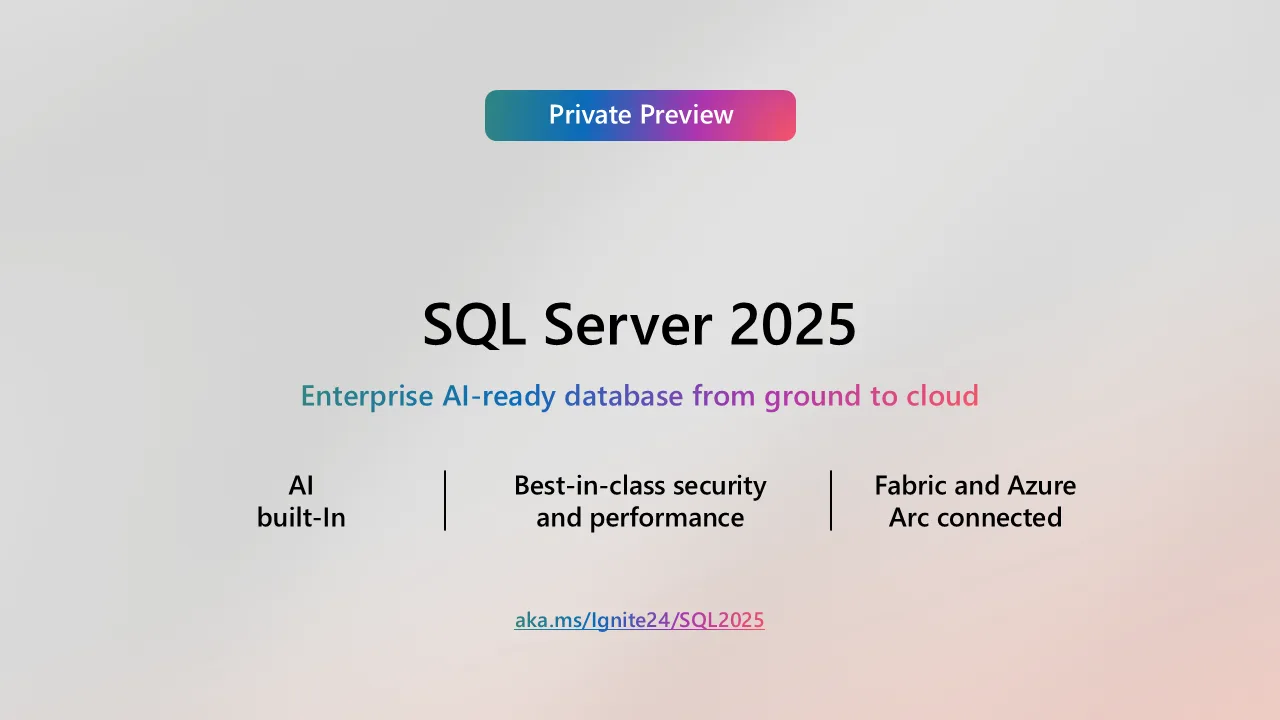
Microsoft Ignite 2024 showcased several major announcements, including the debut of SQL Server 2025 and the tighter integration of Azure SQL with Microsoft Fabric. These advancements demonstrate Microsoft’s drive to simplify data management and enhance organisational capabilities across on-premises, cloud, and hybrid environments.
SQL Server 2025 Delivers Performance and AI Enhancements
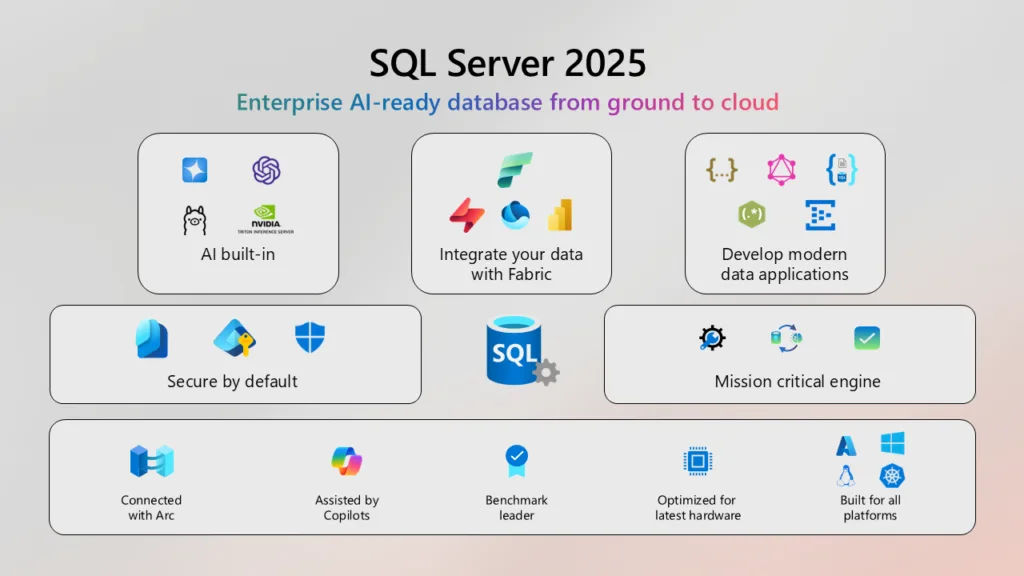
SQL Server 2025 introduces cutting-edge features that cater to the growing demands of modern businesses. Microsoft packed this latest version with built-in artificial intelligence (AI) capabilities, enabling organisations to analyse data, automate processes, and generate insights faster than ever. Businesses can now rely on AI directly within the database for tasks that previously required external tools.
The update also strengthens security. New encryption features and advanced threat detection tools protect sensitive information and ensure compliance with strict data regulations. These enhancements allow companies to safeguard their operations while keeping performance at an all-time high.
In addition to security, SQL Server 2025 elevates operational speed. Its optimised query execution reduces latency and handles complex workloads effortlessly, empowering businesses to maintain smooth operations even under pressure. The platform now supports hybrid cloud environments more effectively, allowing seamless connections between on-premises systems and cloud infrastructure without the need for major reconfiguration.
Microsoft Fabric Gains Power from Azure SQL
Microsoft’s enhanced integration of Azure SQL into Microsoft Fabric transforms the way organisations handle data. Azure SQL, a trusted cloud database platform, now works seamlessly within Fabric’s analytics ecosystem. This deeper integration enables organisations to link their structured data with Fabric’s tools for advanced analytics and machine learning.
Microsoft designed this connection to streamline workflows and improve collaboration across teams. Users can feed operational data from Azure SQL directly into Fabric’s real-time analytics tools, eliminating redundant processes and reducing the need for data transfers. This integration also boosts productivity by creating a unified pipeline that connects data storage, processing, and analysis in a single environment.
Empowering Businesses with a Unified Data Strategy
Microsoft continues to prioritise efficiency and collaboration with these advancements. SQL Server 2025 and Azure SQL within Fabric help businesses eliminate data silos and manage their information in a more cohesive manner. Teams gain access to the tools they need to handle large datasets, develop AI models, and uncover insights without delays or disruptions.
These updates also address the challenges posed by hybrid and multi-cloud environments. Organisations can now access consistent tools and features regardless of their infrastructure, allowing them to transition to the cloud or maintain hybrid setups at their own pace. This flexibility ensures that Microsoft’s solutions adapt to diverse business needs and future-proof existing data strategies.
Accelerating Business Decisions with Real-Time Insights
Microsoft’s announcements reflect the growing demand for real-time analytics and actionable insights. Businesses now have the ability to analyse trends, monitor performance, and make data-driven decisions within moments. SQL Server 2025 and Microsoft Fabric’s integration with Azure SQL ensure that companies gain faster access to meaningful insights, boosting their agility and competitiveness.
Microsoft’s approach supports businesses that seek to harness AI for predictive modelling, risk analysis, and trend forecasting. These tools provide a foundation for smarter operations while minimising complexity.
Shaping the Future of Data Management
SQL Server 2025 and Microsoft Fabric represent more than incremental updates. These innovations signify a shift towards smarter, faster, and more secure data management. By combining SQL Server’s robust database capabilities with Fabric’s analytics tools, Microsoft equips organisations to handle the demands of a data-driven world.
Microsoft plans to expand these capabilities further, aligning its offerings with emerging technologies and market demands. SQL Server 2025 ensures businesses have access to reliable, high-performance databases, while Fabric provides advanced analytics to uncover insights and drive growth.
Microsoft Delivers Tools for Modern Enterprises
Microsoft’s announcements at Ignite 2024 signal its unwavering commitment to empowering businesses. SQL Server 2025 accelerates operations and strengthens security, while Azure SQL’s integration into Fabric connects data silos and creates a cohesive platform for analysis.
Businesses of all sizes now possess the tools to modernise their workflows, protect their data, and unlock the potential of real-time analytics. Microsoft’s solutions deliver efficiency without compromise, ensuring every organisation can thrive in a fast-paced, data-centric landscape.
Wrap Up
Microsoft’s Ignite 2024 announcements mark a turning point in data management and analytics. SQL Server 2025 redefines database performance with AI and hybrid-cloud readiness, while Azure SQL’s integration with Microsoft Fabric unites storage, processing, and analytics into a seamless experience. These updates reflect Microsoft’s vision to empower organisations, simplify operations, and shape the future of data-driven decision-making. With these tools, businesses gain the capabilities they need to innovate, adapt, and excel in an increasingly competitive environment.
What happened after Ignite 2024? (added November 2026)
Added by the Easy Insight Team in November 2026. Daniel's write-up above is unchanged apart from the archive note at the top.
Both announcements have now shipped. For a small business, the useful lesson is how long that took: a year from the keynote stage to general availability.
SQL database in Fabric: preview in 2024, generally available in 2025
Microsoft announced SQL database in Fabric in public preview on 19 November 2024, the first day of Ignite 2024. It reached general availability at Ignite in November 2025.
One correction to the write-up above. The Fabric news was a new product, a transactional database that lives inside Fabric, rather than Azure SQL itself moving in. Microsoft's SQL database in Fabric overview on Microsoft Learn (updated October 2026) describes it as based on Azure SQL Database and using the same engine. Its data is copied automatically into OneLake, Fabric's single data lake, so reports and notebooks can read it without a separate pipeline. Existing Azure SQL databases reach Fabric a different way, through mirroring.
On cost, Microsoft says it shares the capacity model of the other Fabric workloads, billed on compute and storage, so it draws on the same Fabric capacity you pay for rather than a separate database licence. Our Microsoft Fabric pricing guide has the current UK capacity prices.
SQL Server 2025: generally available on 18 November 2025
Microsoft announced general availability of SQL Server 2025 on 18 November 2025, at Ignite 2025. The "built-in AI" described above turned out to mean vector search and embeddings inside the database, called from T-SQL, alongside native JSON, REST calls and regular expressions.
Three changes matter more to a small firm than the AI headline. All are listed on Microsoft Learn's What's new in SQL Server 2025 page and the GA announcement, as of November 2026:
- Bigger Express and Standard editions. Express now allows databases of up to 50 GB, and Standard edition runs on up to 32 cores with 256 GB of buffer pool memory. A new Standard Developer edition is free and matches Standard's features, for building and testing.
- Mirroring into Fabric. SQL Server 2025 can continuously replicate on-premises data into Microsoft Fabric. For a firm with a SQL Server in the office that wants modern reporting without moving the database, that is the realistic route.
- Retirements. Synapse Link is discontinued in favour of mirroring in Fabric, and there is no Web edition: SQL Server 2022 is its last release.
What does this mean for a UK SME now?
Our view: not much has to change. If your reporting reads from one SQL Server or a few spreadsheets, Power BI Pro and a well-built model remain the cheaper answer, as we set out in Fabric vs Synapse. SQL database in Fabric earns its place when you already pay for a Fabric capacity and want a small application database next to your reports. Mirroring from SQL Server 2025 is worth a look when an upgrade is due anyway. If Fabric itself is new to you, start with what Microsoft Fabric is.
The bigger lesson is about reading event news. Both products were announced in preview and took a year to reach general availability, so treat a keynote as a direction, not a delivery date. Ignite 2026 runs from 17 to 20 November, and our Ignite 2026 SME watchlist sets out what to look for. If you want help deciding what any of it means for your own setup, our data engineering and Power BI consultancy work starts from what you already run.
Frequently asked questions
What was announced for SQL Server at Ignite 2024?
SQL Server 2025, then in preview, with built-in AI capabilities, new encryption and threat-detection features, optimised query execution and better support for hybrid environments. It became generally available on 18 November 2025, at the following year's Ignite.
What changed for Microsoft Fabric?
Microsoft announced SQL database in Fabric in public preview on 19 November 2024: an operational database built on the Azure SQL Database engine, whose data is copied into OneLake automatically so it can be analysed without a separate pipeline. It reached general availability at Ignite in November 2025.
What do these announcements mean for a UK data team?
The direction is a unified platform: fewer silos, consistent tools across on-premises, cloud and hybrid setups, and real-time insights available inside the data environment rather than through external tools.
Should a small business move to SQL database in Fabric?
Usually not on its own, in our view. It suits a firm that already pays for a Fabric capacity and wants a small application database next to its reports. A firm running SQL Server on its own servers can mirror data into Fabric from SQL Server 2025 instead, and most SMEs reporting from one database still do well with Power BI Pro alone.
When is Microsoft Ignite 2026?
Microsoft Ignite 2026 runs from 17 to 20 November 2026 at the Moscone Center in San Francisco, and you can also follow it online.
Easy Insight is a UK consultancy for AI, web, apps and data — senior specialists only, no juniors.
About the author
Daniel Whittaker · Senior Business Intelligence Consultant
Daniel Whittaker is a Senior Business Intelligence Consultant at Easy Insight, based in Fareham, Hampshire, and has worked with Power BI since 2015. He leads end-to-end BI projects for clients across the UK — from data modelling and governance through to dashboard design — and trains client teams to run their own reporting on Power BI and the wider Microsoft data stack.
Next step
Want a number before you talk to anyone?
The free Power BI & Fabric Pricing Estimator gives you a first-pass licensing cost in two minutes, and it doesn't ask for an email. When you're ready, a free data review is one call with the consultant who would deliver it; EasyStart Power BI builds are fixed from £4,950.